Showing posts with label #community. Show all posts

Monday, January 22, 2018

“Creating a new model for a healthier commute”

Why do we believe in public transportation? 


Transportation is about more than just moving people from point A to point B. It’s a system that can either limit or expand the opportunities available to people based on where they live. In many cities, the areas with the shadiest access lack investments which leave many Americans without easy access to jobs, goods and service. The only way to move is with cars.

Contamination to yourself and the Environment.

Creating a healthier commute starts with commuters learning of the effectiveness of public transportation and the effect it would have on the environment and yourself.

One issue is contamination with using personal transportation; I mean Cars. This affects the culture and many ways.When commuters use private cars, the effect of pollution to the environment is elevated.

Driving can be highly stressful when you are stuck in a traffic jam, which happens in cities, especially during rush hour. Most commuters spend at least two hours a day commuting to their destination. Driving-related stresses can cause heart diseases and psychological problems. “The longer amount of time you spend in a car getting to and from work, the more time pressure you feel and the lower your overall satisfaction with your life,” explained Margo Hilbrecht, Ph.D., an associate director of research for the Harvard University.

With the focus of a good public transportation, it can help societies thrive. Just look at the image below.
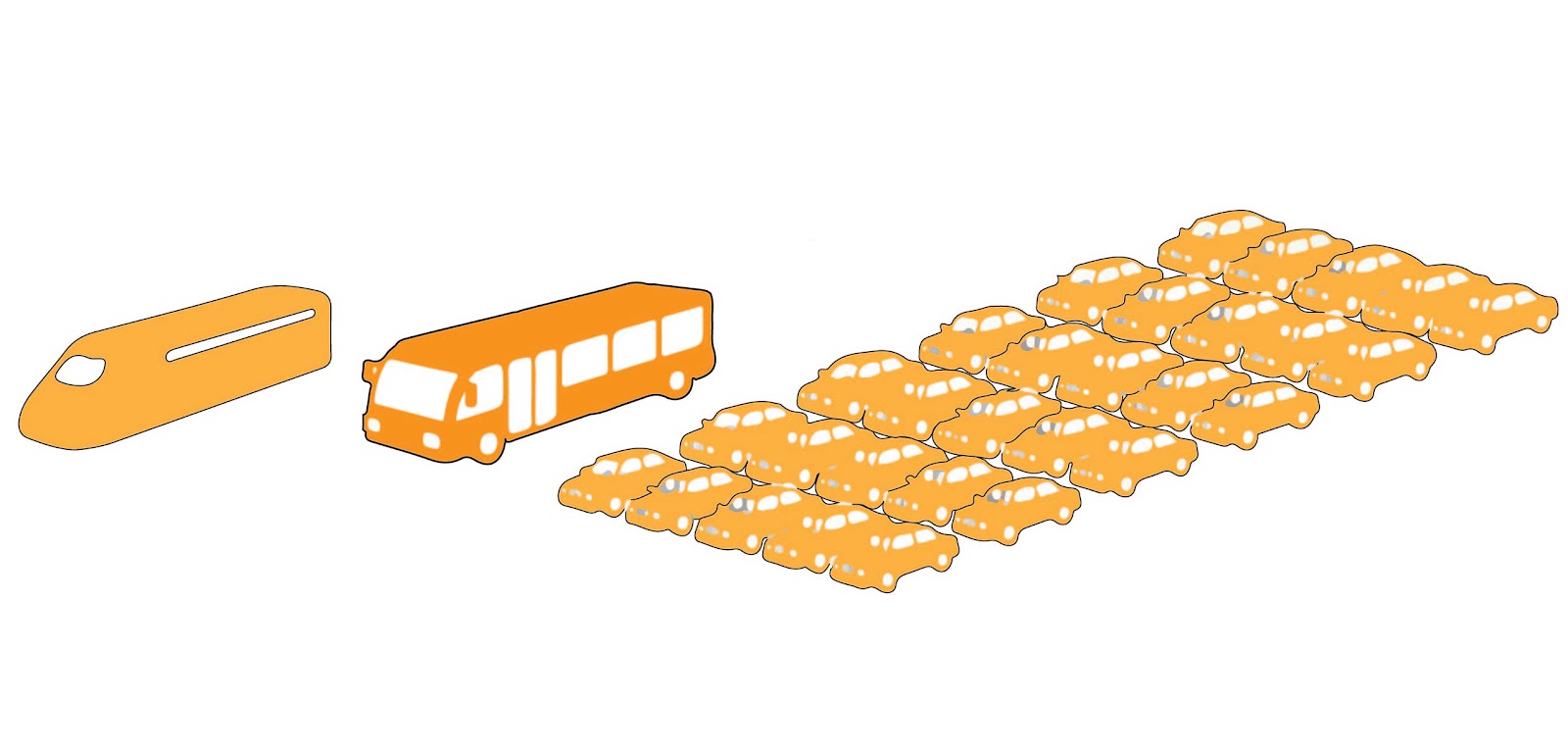
Image 1. For every one bus, it replaces 30 cars. And with effective trains the carbon impact would drastically be reduced.


More people riding buses and trains mean fewer cars on the road, which translates into less smog and greenhouse gas coming from our tailpipes. Yes, many big buses spew more tailpipe emissions than cars, until government officials approve eco-friendly electric buses, those buses will be making their routes today no matter how many passengers are on board. The benefit of less pollution and a healthier culture is vital. Once a new model is created by government parties the momentum of the effectiveness of public transportation will thrive.

Not the correct direction for the economy

Politics portray a primary role in any aspect of planning, but none such more than transportation planning and the investments and policies that go into constructing the aspects associated.

Our government officials play both positive and negative roles in public transport planning, policies and investment; as it shapes decision-making and the degrees of financial support that is given to each project. Because politics brings both positive and negative effects to public transport planning it can both promote and block development. Government parties should compromise on an agreement that repairing and developing a new model for public transportation is the best model. With repairing train system tracks, train frequency and security of the users. Creating an effective model for transportation should be the message created.
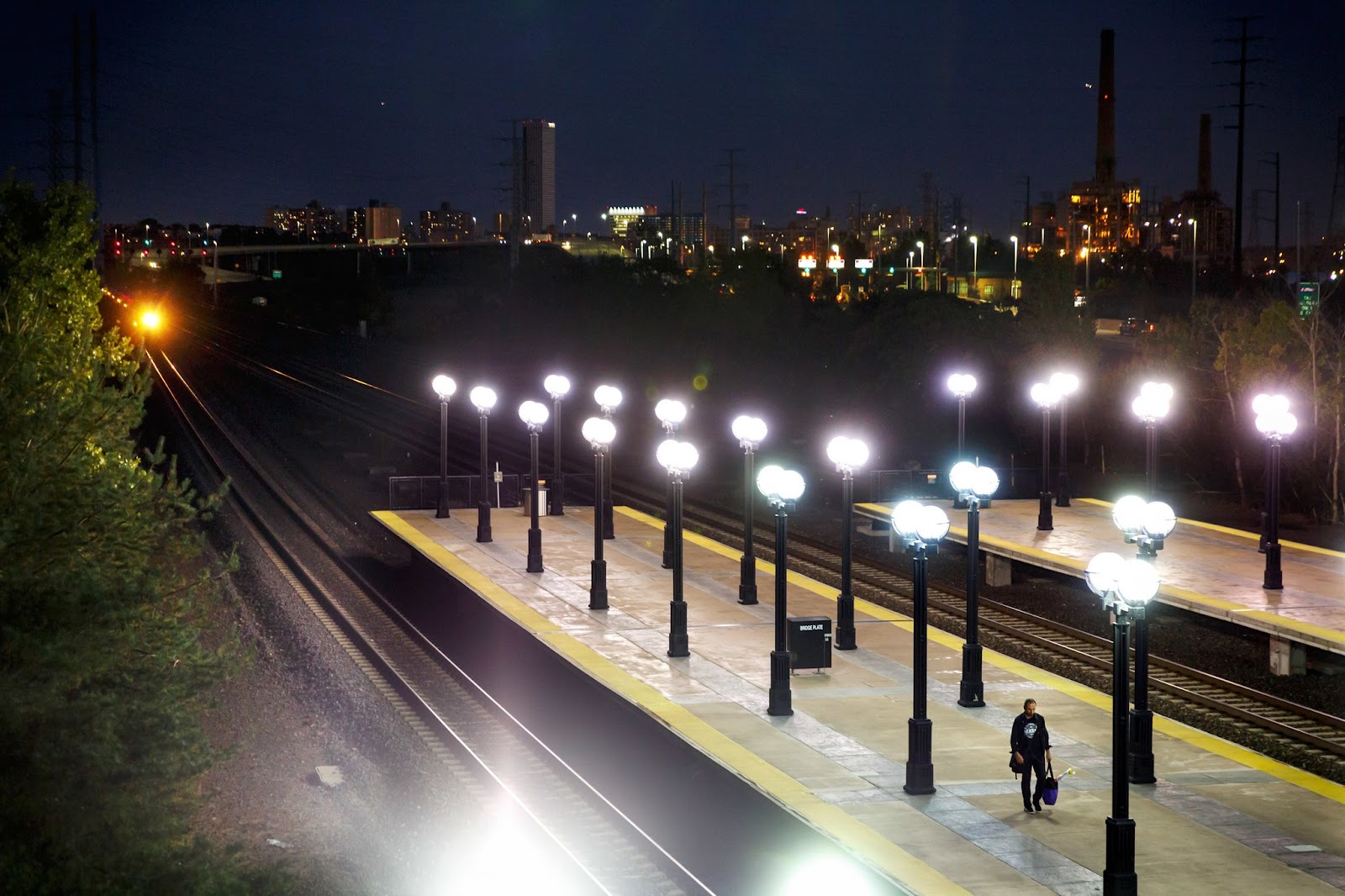

Image 2. Light rail user waiting for New Jersey Light Rail


Zoning code/Restrict parking

One element with true walkability in cities is master planning in cities for transportation. The state of New Jersey, and many other cities suffer from strict zoning codes for on-site parking.

The parking ratio for residential units is relatively low, which is beneficial at making cities less dependant on cars. The initiative should aim at improving public transportation.

But the starting point should be amending and improving public transportation. Of course, this doesn’t depend on each individual city, which makes everything more complicated.

This depends on the interconnectivity with different cities and even at state level. Once we improve the quality of the public transportation, their frequency, their safety, we should focus on reducing the parking ratio in each urban plan.

Let’s take as an example Jersey City in New Jersey. People live in Jersey City because of the urban lifestyle, and still need cars. Why? Many of them often work in other towns in NJ. In most cases these commuters traveling can’t find trains to get them to their destination in other towns, especially when train frequency is low. Others, especially families with young kids, can not rely on the low frequency or very crowded public transportation.

So, when the zoning codes doesn’t allow parking on site, or their ratio is very low, people park on the streets (anywhere on the street). This brings congestion for parking, people spend time looking for a parking, with some parking in illegal parking spaces, like the corner intersection, which can cause accidents for lack of visibility.

And, of course, we believe that when designing the master plan for cities the encouragement of cars should be minimum to assist in creating a stress free experience.

So, what is the solution?

More frequency between transportation routes and a reliable system schedule.

Our government and city officials should collaborate with the community about public transportation in their neighborhood. The issues heard can initiate a dialogue to revamp connectivity and protect commuters safety. Case example,when recently visiting The Liberty Center Science Museum in Jersey City with my two children. The transient route, reliability and connectivity should be easier. I could easily take the light rail in Jersey City to the Science Museum, but the system on weekends proved hard to travel effectively with children. The New Jersey Light Rail was long with its frequency and a challenge with traveling with children especially in winter. Most families explore on weekends, and in any city not just New Jersey. Frequent routes to destinations, accessible stations and path would create less of a challenge especially when traveling with children.

Connectivity

If we want people to take advantage and use the transit system we must create a transit point. Interconnecting storage should be adequate to the users with any mode of transportation. Walking to the closest bus route or train route is beneficial to a healthy and thriving community.

It is time that we unite the parties involved with public transportation infrastructure and help shape the future of commuting. At JMA our design team is focused on strategizing new ways to maximize walkability when we are in the design planning process. It is essential for us to create effective architecture for our clients focused for the community. It is very rewarding when true innovation reflects the future plan of the client and the city it encompasses. If you would like to learn about our commitment to walkable cities, contact us.


Citation
Jason Margolis, “Why taking the bus is better for our health.” PRI “The World”. October 28, 2015. Web

https://www.pri.org/stories/2015-10-28/why-taking-bus-better-our-health-driving


National Association of City Transportation Officials “Transit Street Design Guide” Island Press. 2013 Web


Wednesday, September 6, 2017

Designs That Promote Healthier Communities

When designing a building it is necessary to design features in a home that will promote healthy behaviors and foster engagement opportunities for residents. Even the smallest design changes to a surrounding can have a strong impact on mood and overall health. Spaces that fail to promote community movement can lead to obesity and other physical health conditions. A lack of recreational space in a building can cause a sense of isolation and puts an unwanted strain on our emotional health.

JMA has always made it our mission to create buildings that improve the quality of life for residents and design features that can contribute to a healthier happier lifestyle. When we were designing a large residential building in Buenos Aires, Argentina, we placed a strong emphasis on functional space before formal concept. Our design goal was large apartments, comfortable balconies, abundant daylighting and open views. The development project is 90,000 square ft. and is located in a suburb of Buenos Aires called Ramos Meija. The footprint of the building is open on all 4 sides, letting the building open towards 2 centenarian palms, thus giving the name to the building: Palmeras de Ramos (Palms of Ramos).
Ramos Meija designed by JMA

Design's Impact on Our Mood 

The design of building is a key part of the solution in delivering healthy communities. The rooftop terrace we designed at Palmeras de Ramos is meant to be a place of social encounter for residents to interact and make friends. It is very spacious and encourages residents to incorporate physical activity into their daily routines by walking on the terrace and also around the walkways surrounding the building. Based on the design we created, we believe the accessibility we achieved can help residents combat issues like obesity and related chronic diseases such as diabetes and heart disease. Communities appreciate having a well-designed open space because it promotes active living and movement.
Design Features That Foster Healthy and Active Spaces

It is very important to make sure apartments are designed with an open layout because it improves the quality of life for residents and diminishes the feeling of claustrophobia. At the Palmeras Ramos building we chose to design comfortable balconies for residents. This design feature extends the residents’ homes and makes them feel happy because it gives them access to the outside world.
The comfortable balconies at Ramos Meija
Along with an open floor plan, architects can improve physical and mental health for residents by using a design that improves ventilation and provides fresh air for the home. 54 Bright Street, another development project of JMA’s, is a high performance building built with an open layout and Passive Design strategies that are implemented into all aspects of the design.

The Positive Benefits of Passive Design

Jorge is passionate about Passive Design, he believes that an efficient design means responding to locate climate and site conditions to maximize building users’ comfort. When architects create an efficient design they must be thinking about the natural elements that can help residents feel more comfortable, like wind. Wind provides household heating cooling, ventilation and lighting, thereby reducing or removing the need for mechanical heating or cooling.

At 54 Bright we used passive design techniques to improve indoor air quality and reduce temperature fluctuations making it more enjoyable to live in. Jorge believes that architects should design buildings with comfort and resource-efficiency in mind. Buildings and apartments should be designed to be comfortable for residents to unwind when they need to, but still gives them the opportunity for social interaction. We encourage architects and developers to create buildings that have a strong social structure because it can promote healthy behaviors and prevent isolation.
54 Bright designed by JMA
It doesn’t matter if you are building a large development building or a smaller townhouse, adding a small change like a bench in the front of the building is a tool meant for people to interact with one another and feel happy having a discussion. People need community design features such as outdoor recreational space, safe streets, landscaping, outdoor play space because it can contribute to enhancing a sense of neighborhood identity. With all of our projects it is important for us as architects to create designs that are not only beautiful but resource efficient, embraces its inhabitants, and foster vibrant communities.


Citations

• Stewart, M. Cyril “How design can encourage home and community health”. The American Institute of Architects. Web

• Woo, Lisa “How to design communities that make residents fitter and healthier.” The Guardian. 3 Sept. 2014, Web.

• Center For Active Design “Engaging Communities to Promote Health through Design”. Web.


Thursday, July 13, 2017

The Psychology behind Urban Design


Have you ever wondered as you walked around the city why some public spaces attract crowds of happy people, and other spaces you want to run from? The difference between the two is whether or not that architect was successful in creating a design that embraces its community and inhabitants. A city must include buildings and public areas that benefit society, not hinder it. Urban design is the process on how we achieve this goal. It is an important tool architects and planners use to enliven and enrich the experience of urban life in cities, like New York and Jersey City.
Urban design gives character to buildings and neighborhoods as a whole. It’s fascinating when architects and urban planners use their talents and knowledge to construct buildings and create public spaces that uplift the entire energy of city. Urban design is special because it can promote community involvement and enhance people’s quality of life.


What is considered a good urban design?

Good urban design affects your mood, makes you feel happy, and you don’t mind staying in that space for a long time. For instance, in the city the High Line is a great example of this type of location. On any day during the week or weekend the High Line is filled with hundreds of people who happily meander through the area. Urban design should be functional and attractive for its inhabitants. All public spaces should serve a specific purpose from the placement of a bench, to the placement of flowers and greenery.
The High Line located in NYC


JMA’s Urban Design Projects
Jorge Mastropietro creates spaces that bring people together whether they are inside or outside the home. For all of his projects he always keeps in mind how that building should perform and how to make people feel comfortable around that space. 
The perfect example of this type of building is Jorge’s Newark Affordable Housing Projects. It is a group of homes that provide the residents and visitors with a welcoming and positive energy. The houses are located in a low-income residential urban density within a suburban neighborhood in Jersey. The project called for a design of a family residence that could be placed on a single lot as a free-standing unit, while being versatile enough to be repeated in a group setting that looks deliberate and appropriate.
Newark Affordable Housing Projects, designed by JMA
 
The resulting module engages the street traffic, both pedestrian and vehicular, with planes of various volumes on several different scales. Jorge designed the facade of the homes to be very appealing, a plus for pedestrians as they walk by. He did this by using a variety of sustainable materials like red cedar board; aluminum clad wood, and corrugated metal. All these various materials help stir interest in the viewer and provide a unique appearance on the street-scape.


In addition to the pleasant appearance of the front of the houses, the backyard spaces are just as functional and beautiful. All the homes have a backyard space that helps residents connect back with nature. The backyard area is a very warm space, giving the residents a place to interact, relax, and have a good time.
Newark Affordable Housing Projects (Backyard)


Jorge designed each apartment with function and resource efficiency in mind. The residents who live on the first floor still have a sense of privacy with their doors not so close to the sidewalk. It also doesn’t make pedestrians feel like they are intruding in someone’s personal space.
Urban design helps people live, work, and relax in happier and functional spaces. It is a important process architects and planners use to adapt to the psychological desires of people.  It is amazing how one wrong design decision can make a space feel dreary and unreceptive. Architects should create buildings that motivate people to be drawn to it and makes them never want to leave. 


Citations
  • EUKN Research. “Urban Design, how important is it for cities?” Web.
  • Ellard, Colin “Cities and their psychology: how neuroscience affects urban planning”. The Guardian. Web Feb. 4 2014.